Venezuela supports reform of UNESCO and calls for the “full, absolute and total” lifting of sanctions
Courtesy
Published at: 19/10/2026 12:21 PM
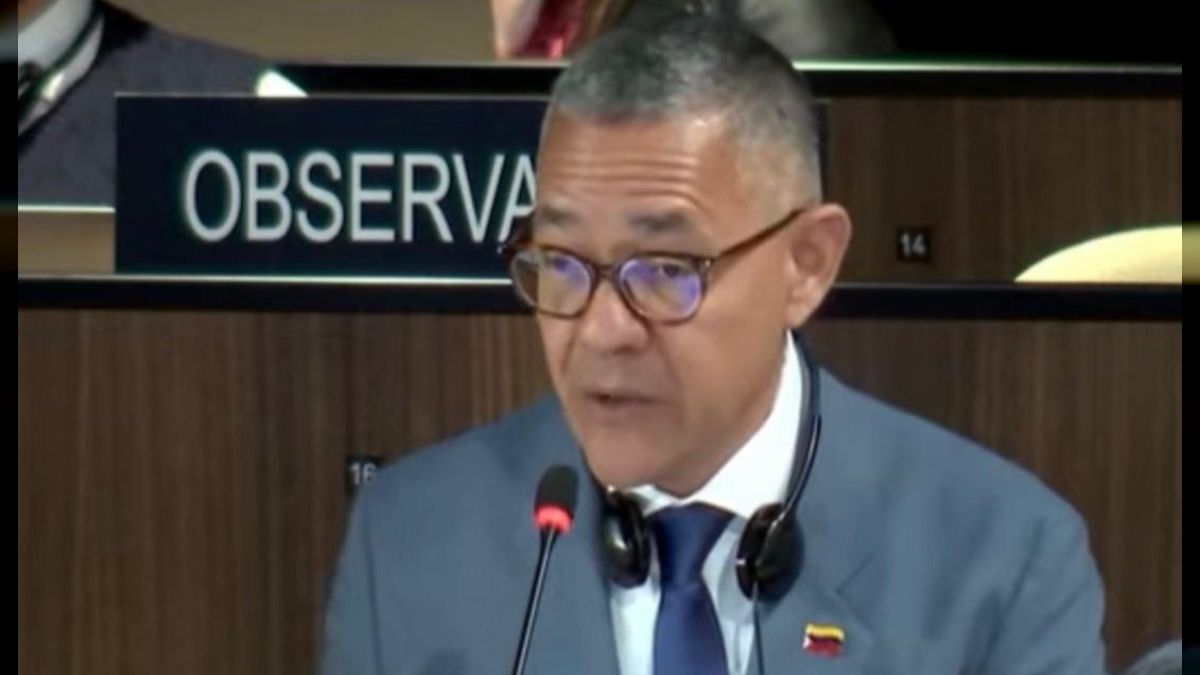
The Bolivarian Republic of Venezuela expressed its support for the reform process of the United Nations Educational, Scientific and Cultural Organization (UNESCO) and the UNESCO 80 road map, while warning about the effects of unilateral coercive measures (MCU) on the capacity of States to contribute fully to the work of the multilateral agency, said Ambassador Ernesto Villegas Poljak, permanent delegate of the Latin American nation before the multilateral body, during the 225th meeting of the Executive Council, held in Paris.
Venezuela stressed the importance of the reforms carried out by the organization's director general, Khaled El-Anany, being translated into concrete results, greater transparency and a more effective UNESCO, closer to the peoples and capable of responding to contemporary challenges.
In that regard, it supported open and inclusive working mechanisms that would accompany the process and help institutional transformations to strengthen the Organization's mandate.
The Venezuelan delegation also highlighted the need to strengthen Social and Human Sciences to address the ethical implications of technological changes, as well as to expand efforts to safeguard heritage, include people with disabilities and promote women's leadership and visibility.
Referring to the impact of the MCUs, Villegas Poljak called for their “full, absolute and total” uprising and warned that they restrict Venezuela's ability to contribute more effectively and sustainably to the programs and objectives of UNESCO. “Without these sanctions, my country will be able to contribute more and better to the sustainability of UNESCO inside and outside of headquarters,” he said.
The ambassador also highlighted the value of UNESCO's cooperation on the ground, in particular through the Regional Office in Havana, which accompanies Cuba, the Dominican Republic, Haiti and Venezuela. As an example, he mentioned coordination with the Venezuelan authorities to carry out a needs assessment following the earthquakes of June 24, despite the difficulties arising from unilateral coercive measures.
Venezuela maintained that the reform of the Organization, beyond administrative adjustments, should focus on strengthening its presence in the regions, expanding its capacity for cooperation and ensuring that its resources are translated into tangible benefits for peoples. From that perspective, he highlighted the strategic relevance of Latin America and the Caribbean, due to its cultural and ecological diversity, its natural resources and the potential of its population.
With regard to the UNESCO 80 road map, the South American nation reiterated its willingness to contribute constructively to the reform process, with the conviction that institutional renewal will strengthen the Organization's transparency, efficiency and capacity to fulfill its mandate, focused on promoting international cooperation and peacebuilding through education, science, culture and communication.
PERMANENT DELEGATION OF VENEZUELA TO UNESCO