Venezuela Present! Forum of the Global South promotes a commitment to sovereignty from Shanghai
Internet
Published at: 17/10/2026 10:51 AM
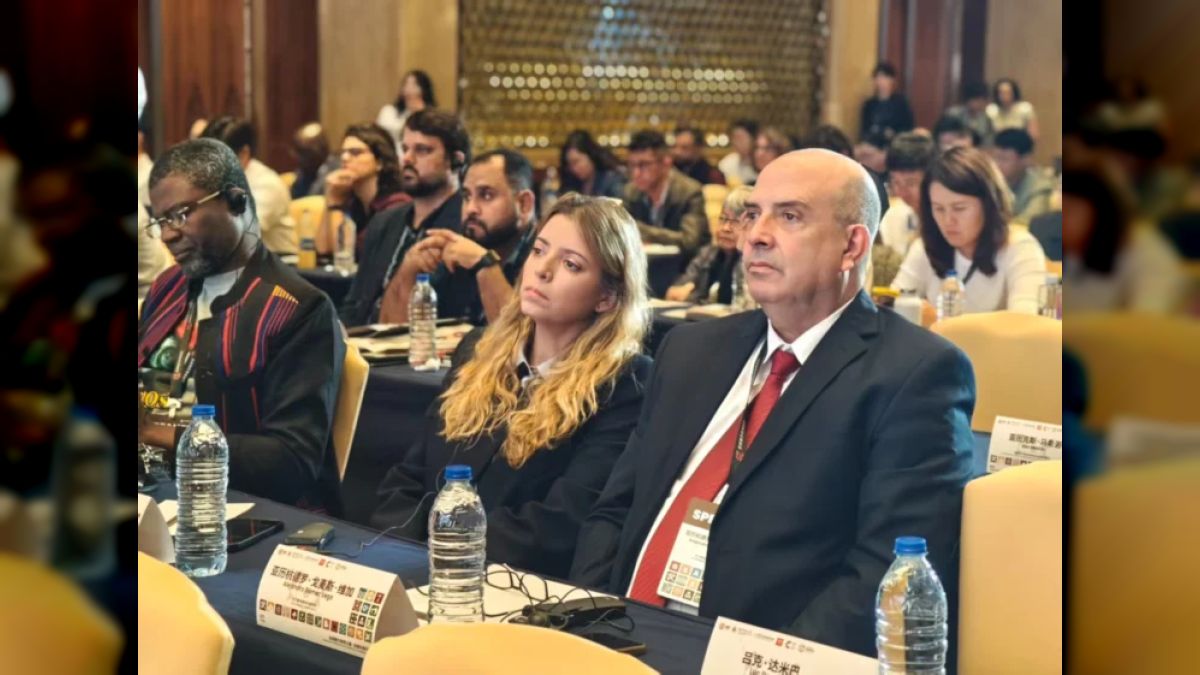
This Saturday, October 17 and Sunday, October 18, China will host the Global South Academic Forum, a space that brings together delegations from all over the developing world and places sovereignty and the role of the State at the center of the debate.
The meeting commemorates six decades of the Tricontinental Conference held in Havana in 1966 and takes up the decolonization tasks that remained pending, he reported on his teleSUR website.
The opening session revolved around the theme “Political Parties of the Global South: Governance and Modernization”. The vice-president of Ghana, Jane Naana Opoku-Agyemang, warned that political independence is not enough to transform a country.
Genuine development, said the president, requires solid institutions, robust education, sovereign infrastructure and a diversified economy at the service of popular aspirations. He also highlighted South-South cooperation and the use of connectivity initiatives such as the Belt and Road, without hegemonic impositions.
This was stated by Zhu Junwen, undersecretary of the Communist Party of China at the East China Normal University, during the panels. For academics, each nation has the right to build its own model according to its historical realities.
The program dedicates a space to the role of party organizations. The agenda proposes to strengthen management capacity, the mobilization of society and innovation in institutions, and calls on parties to transcend electoral slogans.
The call includes incorporating young people and women into public administration, an axis that several panelists pointed out as a condition for renewing politics in the South.
Modernization, according to the participants, does not allow tutoring. Each nation must define its priorities without being subject to prescriptions imposed from outside, a premise that runs through panels and plenary sessions.
In this scenario, Prensa Latina and TeleSUR highlighted the importance of South-South cooperation to face the challenges of artificial intelligence (AI) and strengthen the communication sovereignty of developing countries.
The president of TeleSUR, Patricia Villegas, called for strengthening common networks, organization and strategies among media in the region in the face of current communication challenges.
Speaking to Prensa Latina, Villegas stated that communication constitutes one of the main scenarios of contemporary dispute and warned about the role of the so-called cognitive war.
In addressing the impact of artificial intelligence, he considered that this technology can generate new forms of dependence and widen existing gaps, so he defended South-South cooperation as a way to promote technology transfer and the training of human capital.
Along these lines, the vice-president of Prensa Latina, Alejandro Gómez, pointed out that technological advances pose challenges that transcend the ethical debate on the use of AI and encompass technological sovereignty, information independence and the autonomy of peoples.
Gómez said that media in the Global South need to deepen the exchange of knowledge and specialized training to adapt these tools to their cultural and linguistic realities, as well as to progressively develop their own models.
The executive highlighted China as a strategic partner for media in developing countries, for its advances in artificial intelligence and opportunities for cooperation in technology transfer and professional training.
He also stressed that dependence on technologies developed abroad can limit communication autonomy and reduce the diversity of languages and perspectives present in information content.