
Published at: 14/10/2026 07:00 PM
THE GENOCIDE OF INDIGENOUS PEOPLES IN VENEZUELA
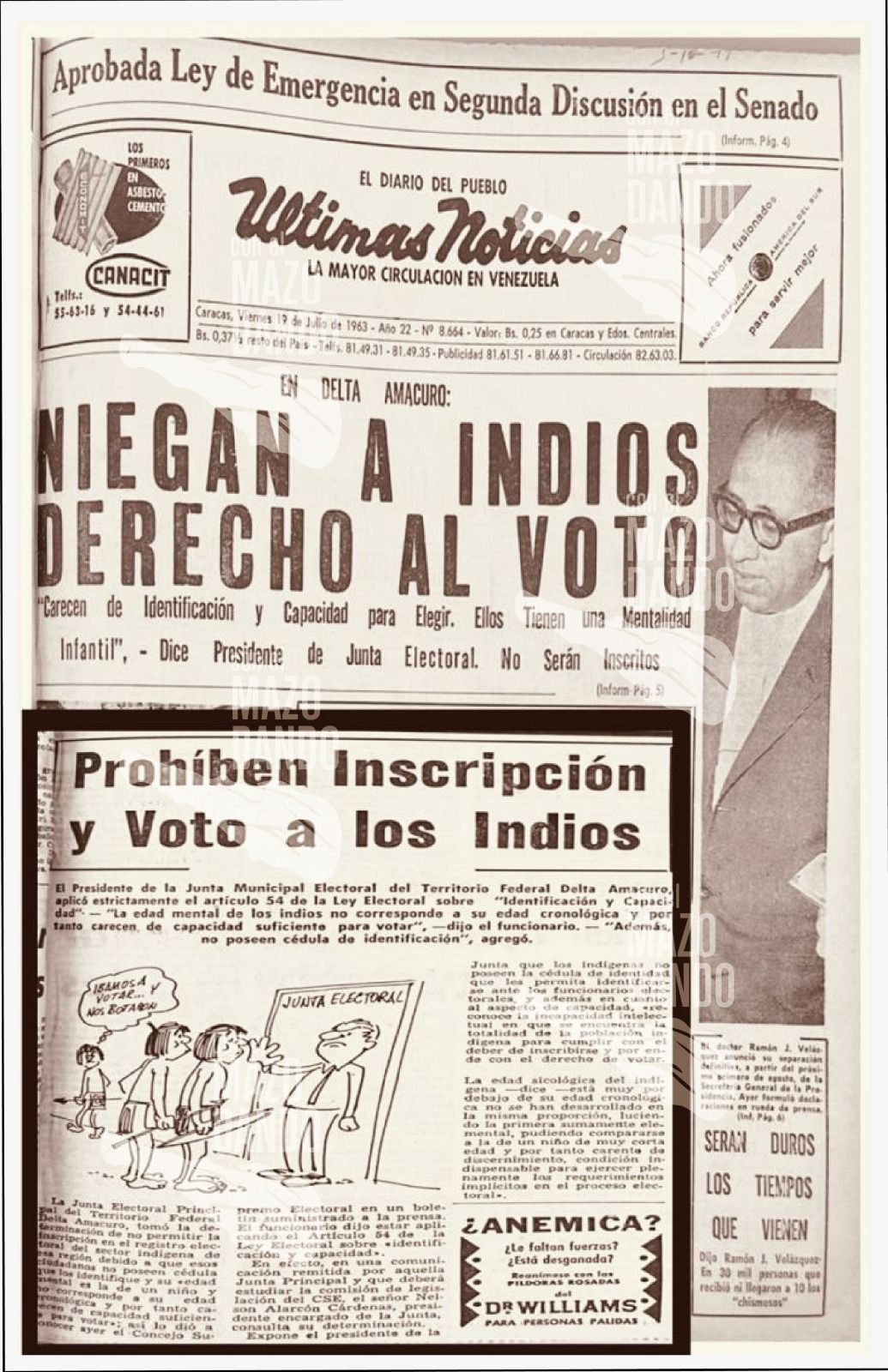
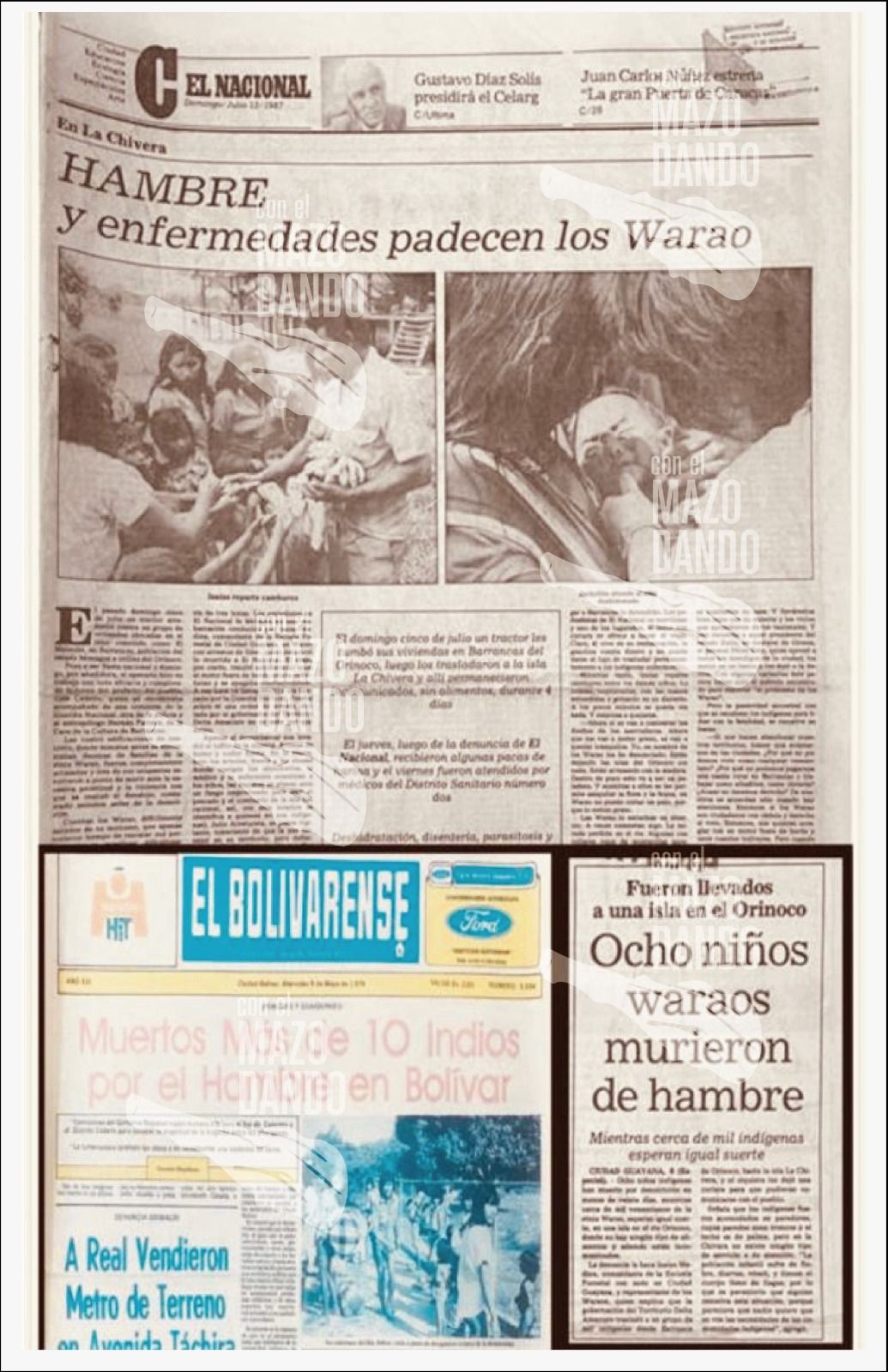
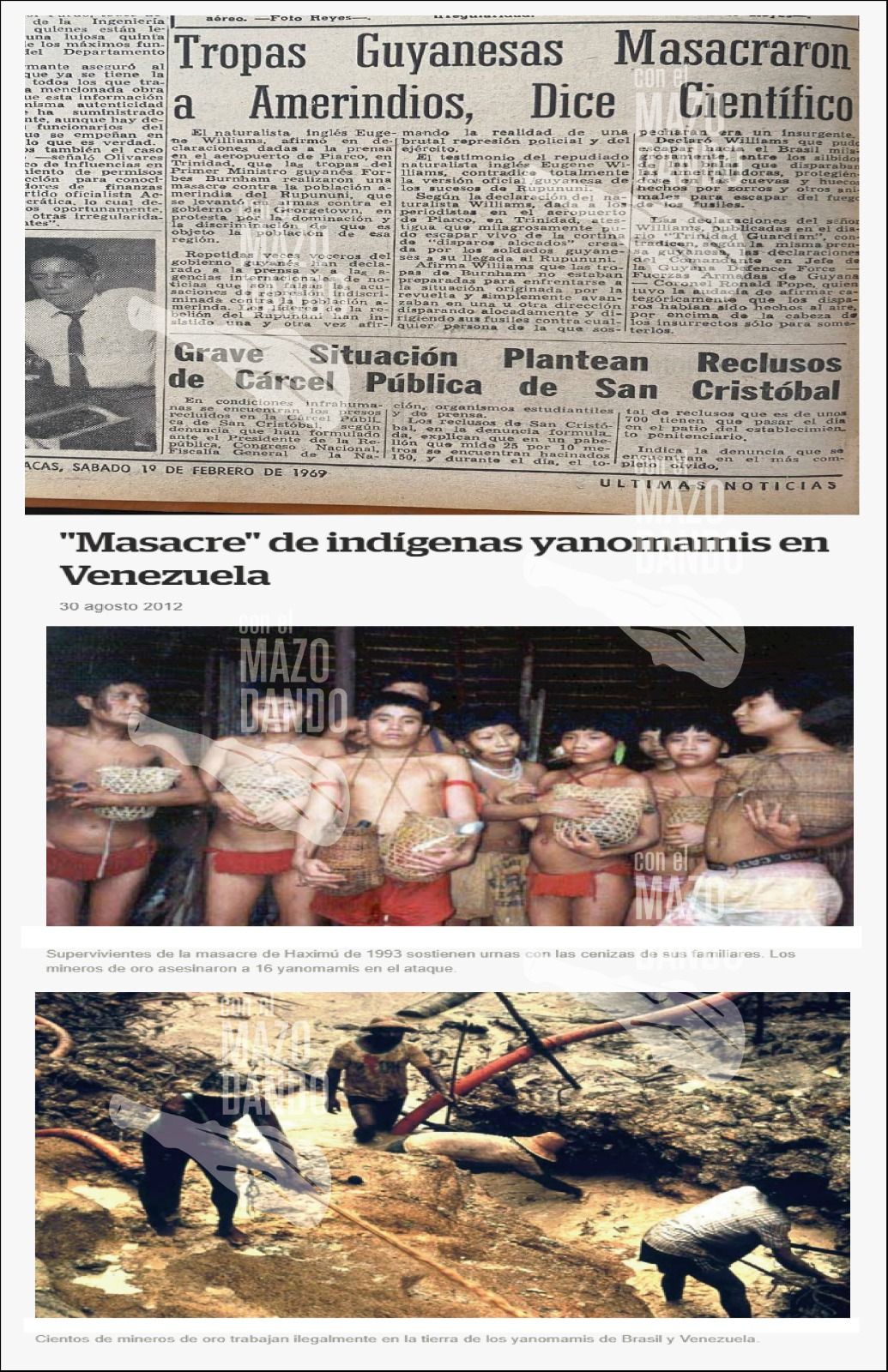
(El Nacional, 3-11-1974; Latest News, 19-7-63; El Nacional, 11-7-87; Latest News, 1-2-69)
- When Christopher Columbus landed in Macuro, on August 2, 1498, Venezuela had an estimated population of 1.2 million inhabitants, distributed in three major original nations: the Arahuacs in Perijá, Zulia and Falcón; the Caribes (Cariñas) throughout the central and eastern coast; and the Timotocuicas in the mountainous areas of the Andes.
- By 1508, victims of slavery, sword, firearms, mastiffs, impaling and diseases brought by the Spanish, the population was reduced to less than 300,000.
- Something similar had happened in the Dominican Republic, then part of Hispaniola. According to the chronicle of Fray Bartolomé de Las Casas, when he arrived on that great island in 1508 “... 60,000 people lived on the islands, including indigenous people, so between 1498 and 1508, more than 3 million people had perished between war, slavery and mines. Who is going to believe this in future generations?”
- The 1570 census for the province of Venezuela reveals that there were only 60,000 tributary Indians between 16 and 50 years old, which indicates that by that date 78% of the population was exterminated without contemplation of any kind.
- “The indigenous people,” de Las Casas says in his report, “don't give any importance to gold and other things of value. They lack the sense of commerce, they neither buy nor sell, and they rely entirely on their natural environment for survival. They are very generous with their possessions and for the same reason... they expect to be treated with the same degree of generosity...”.
- When Colón set foot in Venezuela, he wrote in his diary that “they don't carry weapons or know them. When they showed them a sword, they picked it up by the blade and cut themselves because they didn't know what it was. They don't have iron. Their spears are made of cane... They would be magnificent servants (slaves)... with fifty men we would subjugate them all and with them we would do what we wanted...”.
- To the letter, Admiral Colón complied with his criminal law. To extract 12 tons of pearls, between 1500 and 1540, on the island of Cubagua, then Nueva Cádiz, 50,000 Lucayos Indians died, due to the explosion of the eardrums and pulmonary hemorrhages, caused by incessant immersions to the seabed.
- In his “Very Brief Account of the Destruction of the Indies”, written in 1542, de Las Casas denounced the ongoing genocide to the king of Spain and the world. In the chapter “From the Pearl Coast and Paria and the Island of Trinidad”, he described “the hellish death”: "The pearl fishery is one of the cruelest and most unhappy things in the world that can be. There is no life in hell in this world that can be compared to it, even if the life of mining gold is terrible and very serious. Put them in the sea three and four and five fathoms deep, from morning until the sun goes down. They are always under water swimming, breathlessly, catching the oysters where pearls are born. They come out with some nets full of them up high to growl, where a Spanish executioner is in a canoe or wafer, and if they take a long time to rest, he punches them and throws them into the water so that they can go back to fishing. Their food is fish, and the same food that has pearls, and cornbread... The bed they give them at night is to throw them in a trap in the dirt, so they don't leave. Sometimes, they dive and never come out again, because sharks and marajos, which are two species of very crude sea beasts that swallow an entire man, kill them and eat them. With this unbearable exercise, all the Lucay Indians (50,000) that existed on the islands, who were great swimmers, and from many other provinces, where this great farm was built, were destroyed”.
- However, over the centuries, the heirs of that indigenous holocaust enshrined in the celebrations of the “Day of the Race” the destruction of the survivors of that first genocide. Especially the governments of Representative Democracy, which every October 12 honored the statues of butchers with floral offerings and turned the red page very quickly when one of the many massacres of indigenous people shocked public opinion.
- Cases that have been recorded for history in the episodes reported by Father Luis María Olaso s.j., a pioneer in the Defense of Human Rights in the abuses committed by landowners of the Zinng Reverón family in the Guanay Valley, against members of the Piaroa (Huotüja) ethnic group, Alto de Manapiare of the edo. Amazonas
- As well as the Paraguaipoa Massacre, also denounced by Father Olaso s.j., in his report to the Office of the Attorney General of the Republic in 1992, where President Carlos Andrés Pérez's bodyguards massacred three individuals of the Wayuu ethnic group during the celebration of the “500 years of the Discovery”. Another bloody “Day of the Race”.
- Also recorded are “La Matanza en Los Llanos” or “La Rubiera Massacre”, which occurred on December 26, 1967 in Alto Apure”, on the border with Colombia, where cattle ranchers killed 16 members of a Cuiva Indian family, in the practice of the extermination races of that area known as “Guajibear”.
- The red pages of the Punto Fijo Pact governments also include the eight children of the Warao ethnic group who died of hunger and cold when they were abandoned with their families on La Chivera Island, in the Orinoco River Delta, by orders of the governor of that entity, Emery Mata Millán, who demolished their homes located in “Las Barrancas”.
- The “Yanomami Massacre” carried out on August 24, 1993, by illegal mining agents (prospectors) in Venezuelan territory, in which 16 members of that ethnic group, mostly women and children, were savagely murdered to dispossess them of their territories.
- As well as the constant denial of the basic and elementary rights enshrined in the National Constitution of 1961, which prevented members of Venezuelan indigenous ethnic groups from accessing essential education and health services or exercising the right to vote because their identification was “prohibited” for electoral reasons. In other words, they were nobody in the eyes of the law and the political status quo.
Mazo News Team