
THE DEAD OF DEBT
Published at: 11/11/2026 08:00 PM
 THE DEAD OF DEBT
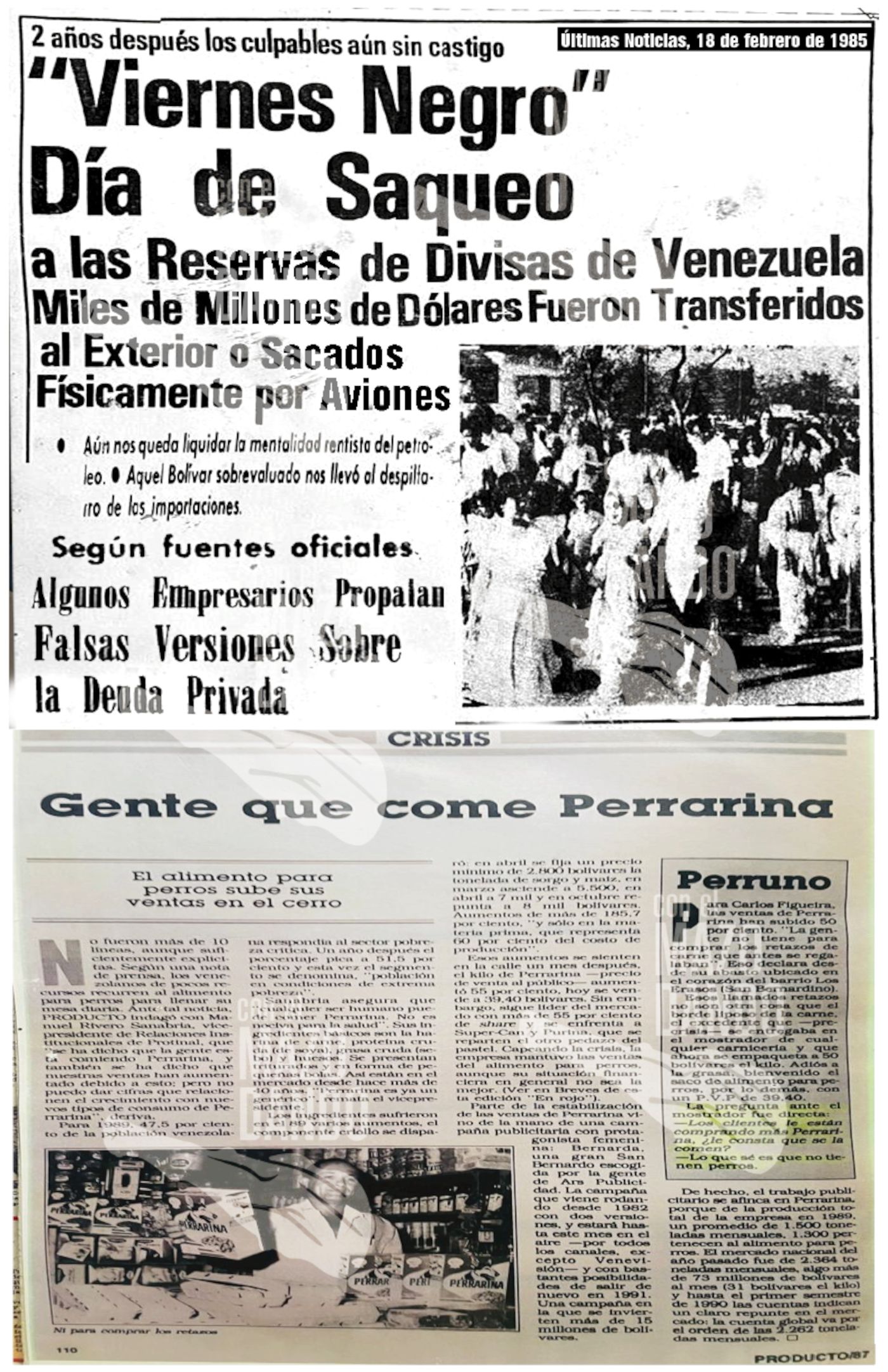
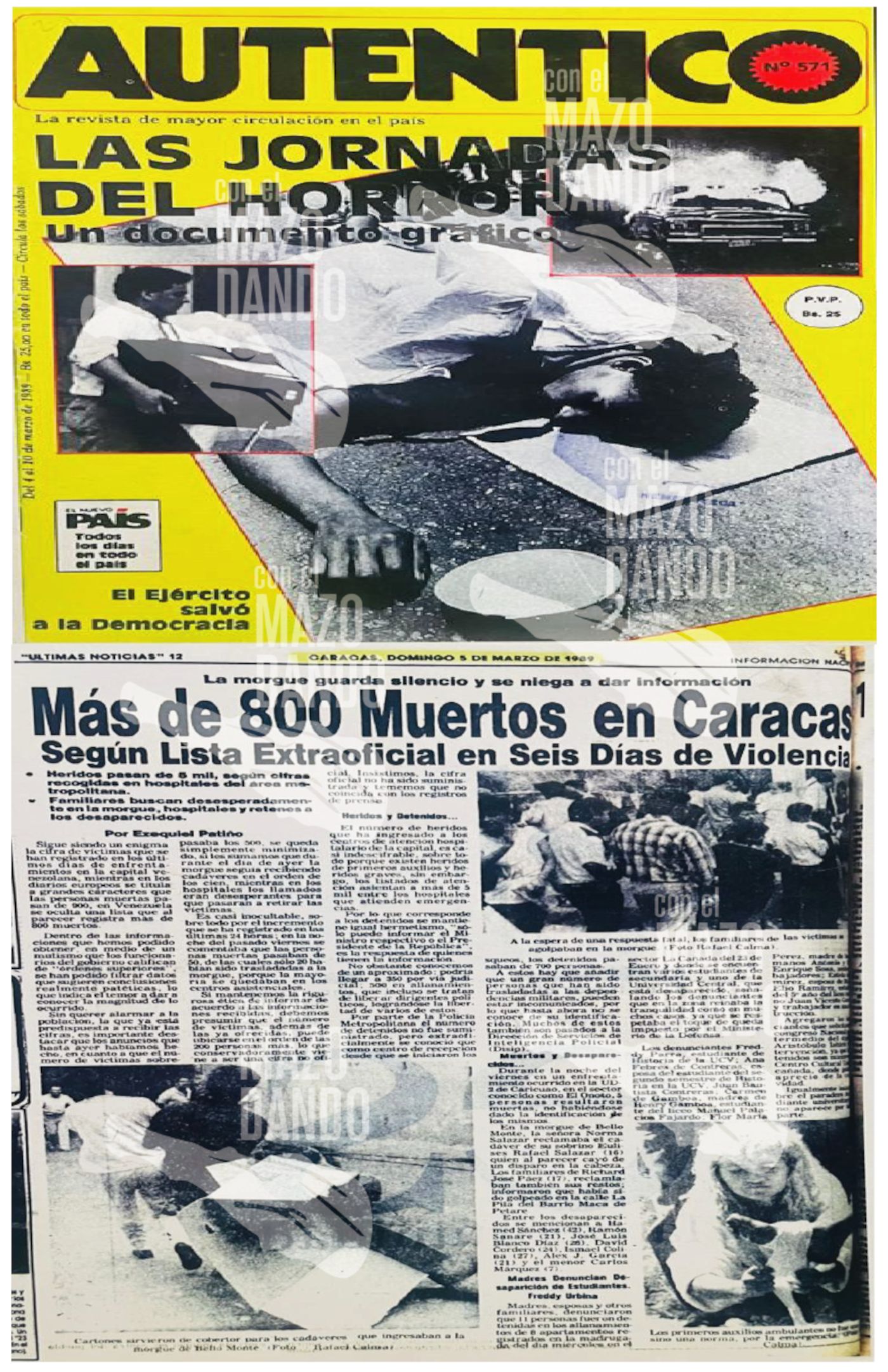
(El Mundo, February 28, 1986; Latest News, February 18, 1985; Product, 1987/Authentic; March 10, 1989; El Nacional, February 26, 1989; The Dead of Debt, author: Alfredo Tarre Murzi “SANIN”, May 1989)
- At the beginning of 1987, Alfredo Tarre Murzi “Sanín”, lawyer, diplomat and columnist for El Nacional, was intercepted by a group of agents of Jaime Lusinchi's political police, in the parking lot of his building located in the Santa Rosa de Lima housing estate, and after asking him: Are you Tarre Murzi? , he was brutally beaten. When the assailants managed to subdue him on the floor, the round of kicks began. After delivering the wild message, they shouted: “This is for you to learn to respect”, and they fled the place.
- El Nacional, El Universal and Cadena Capriles, which exercised the oligopoly of the print media, silenced the news on orders from Miraflores. The news programs of RCTV and Venevisión were taken off the air when they broadcast, on channels 2 and 4, the first news of what happened to Dr. Tarre Murzi. From RECADI, the directors and owners of the “Big Press” received preferential dollars in exchange for informational silence.
- Lusinchi's criminal intolerance, exercised against a journalist for reporting deaths caused by foreign public debt and social debt, in addition to those that would later occur in the coming events of El Caracazo, was the price that the columnist of “Palco de Sombra” had to pay for telling the truth strictly.
- In that regime of complicity in the Fourth Republic where, until the date of the physical aggression against SANIN, the brand-new representative democracy showed all its scourges rampant, there was direct violence through political repression with more than 11,000 dead and missing, but there was a more serious, deadlier and more serious silent violence, translated into hunger, chronic marginality, malnutrition, housing shortage, crime overwhelmed without treatment adequate, lack of health and education services, all the product of the omission of the puntofijist regime in the face of the extreme critical misery that the nation suffered at a time of the greatest influx of economic resources in our history, sufficient to provide a solution to all these ills. During that period of the sudden rise in oil prices (1974-1985), Venezuela received 244 billion dollars, equivalent to 18 times the Marshall Plan, which served to rebuild Europe devastated by World War II.
- Between 1983 and 1987, Venezuela paid international creditor banks 30 billion dollars, between capital and interest, in terms of public and private external debt. The State took over the private sector under pressure from large and powerful economic groups that were conspiring to continue looting the country. Just as they did before “Black Friday” (18-03-1983), when they took out suitcases full of currency in their private planes, before the decree devaluation of the bolivar took place.
- On February 26, 1987, President Jaime Lusinchi further aggravated the situation, signing an agreement to restructure foreign public debt for 27 billion dollars, which he described as “the best refinancing in the world”. A year later, he admitted his own clumsiness when he declared that “the creditors deceived us” (El Nacional, 26-02-1989).
- The flight of capital was unstoppable, 85 billion dollars left the country to tax havens in an unrestrained stampede validated by the granting of foreign exchange that Lusinchi personally ordered via RECADI. Inflation, on the other hand, in that five-year period, registered a cumulative record of 170%.
- Thanks to Lusinchi, and its infamous debt restructuring agreement, poverty devastated 51.9% of the population in 1987. In other words, more than half of Venezuelans lived below the threshold of all deficiencies. According to the interview conducted by the magazine Producto with the vice-president of Protinal, Manuel Rivero Sanabria, the consumption of Perrarina skyrocketed and became part of the dominant food solutions in popular neighborhoods. The poverty rate jumped 34% in a single year.
- When, in 1992, Lusinchi joined the Congress of the Republic as a senator for life, Sanin dedicated the following lines to him from his column Palco de Sombra: “In Venezuela we all know that he is a well-rounded rascal, a cynic capable of the worst felonies, a defendant of embezzlement, concussion and illicit enrichment, an accused manager of business and trafficking in influence, a massive and cynical criminal who evaded justice and took refuge in Miami, where almost all the embezzlers and thieves in Venezuelan politics will end up”.
- Regarding the economic and social catastrophe that was looming over Venezuela, teacher Luis Beltrán Prieto Figueroa publicly requested the imprisonment of those who initially indebted the country and chained future generations to misery, in the following terms: “Carlos Andrés Pérez and Luis Herrera Campins must be in jail for having illegally indebted the country (El Mundo, February 28, 1986)”. “The saying goes, Maestro Prieto added, that prison is not made for decent people and I ask: Are those who illegally indebted the Nation decent or did they seize what they borrowed to put into their own accounts or to squander it?... The completed act of refinancing is a consequence of the completed act of (illegal) indebtedness. Without this one there wouldn't be that one. And good deeds are all that have led the country to ruin and what is left to come...”.
- Accomplished facts were the more than 1 billion dollars that Vinicio Carrera stole as Luis Herrera's Minister of Transportation and Communications, the more than 100 million dollars that the Governor of Caracas, Rodolfo José Cárdenas, stole on a road to Chuspa that he charged and never built (Miquilena's son-in-law), or the 40 billion dollars granted by RECADI with overbilling or overprices for imports that never arrived at Venezuelan ports.
- Without pause or mercy, three consecutive governments Carlos Andrés Pérez I (1974-1979), Luis Herrera Campins (1979-1984) and Lusinchi (1984-1989) were responsible for making effective the silent violence enshrined in corruption scandals, engendered by class abysses, the violence of a people below crushed and mistreated by the government from above and the oligarchies of money, violence overlaid by waste, deception, plunder and the theatrical farce staged by the owners of the circus, in complicity with the owners of communication.
Mazo News Team