
Published at: 04/11/2026 07:50 PM
CARACAS 1993 - 1994: CAPITAL OF INSECURITY AND HIGH CRIME RATES
(2001, November 1, 1993; Police Chronicle and Latest News, December 1993 — January 1994; Report: Pan American Health Organization 1993)
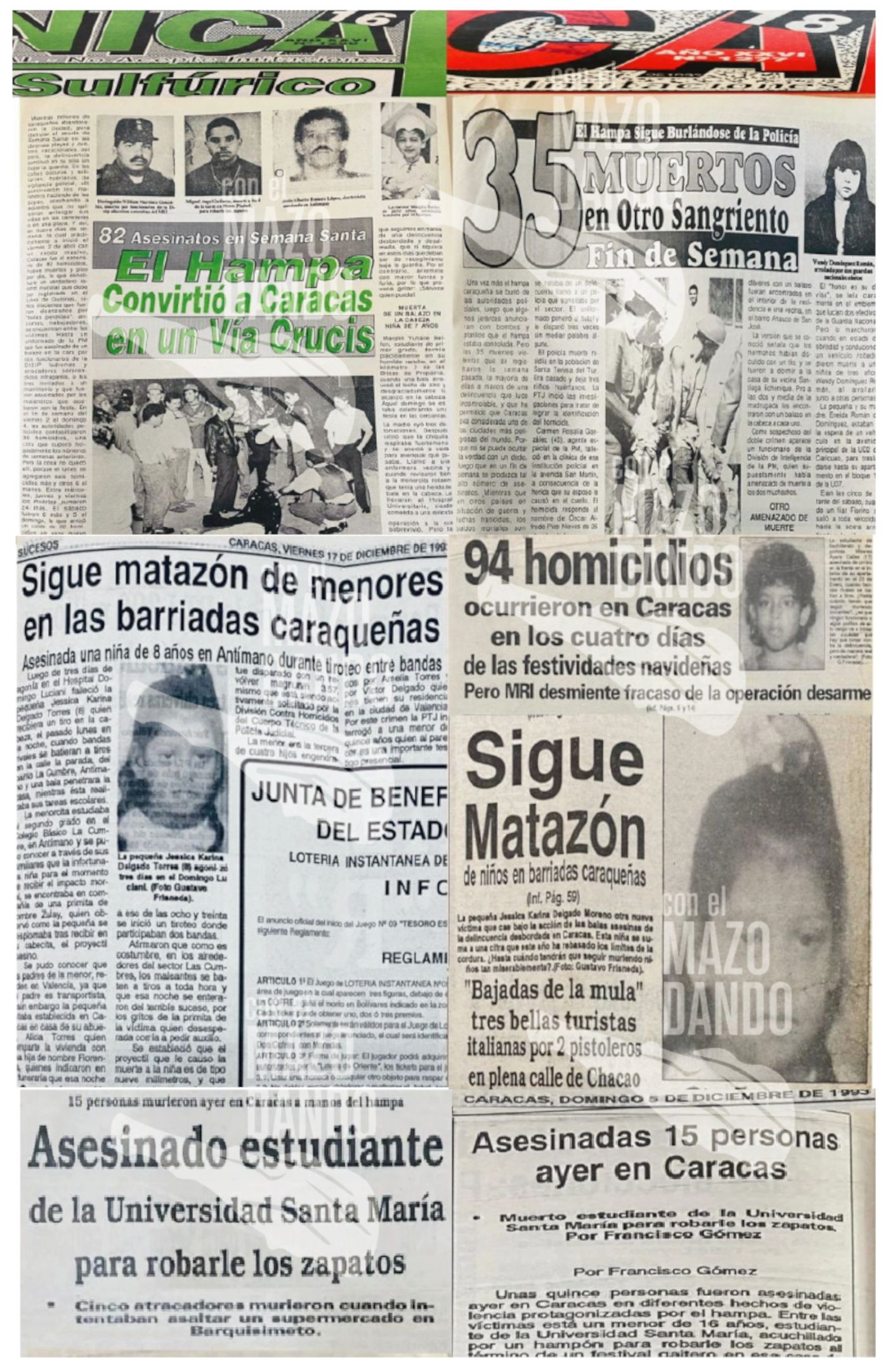
- Venezuela closed 1993 with a rate that exceeded 20 homicides per 100,000 inhabitants, adding up to 4,292 murders nationwide throughout the year. This figure would rise to 4,733 in 1994, with the largest proportion concentrated in the Metropolitan Area of Caracas.
- During the years 1993 and 1994, the city of Caracas consolidated a trend of endemic violence where weekends became the most critical periods. The combination of a deep political and economic crisis and the rise of financial terrorism increased crime figures.
- Since the beginning of 1990, the Pan American Health Organization (PAHO) reported that homicide displaced traffic accidents as the leading cause of death among young men aged 15 to 29 in the Venezuelan capital.
- The numbers of victims of urban violence over the weekends became part of the big press headlines that reflected the rise of insecurity and crime as a weekly “part of the war”.
- Examples of the impact:
- On the weekend of October 25, 1993, 35 violent deaths were officially recorded in just 48 hours. This occurred in parallel with the failure of government urban security plans (Police Chronicle).
- On the weekend of November 1, 32 violent deaths by firearms were recorded (daily 2001).
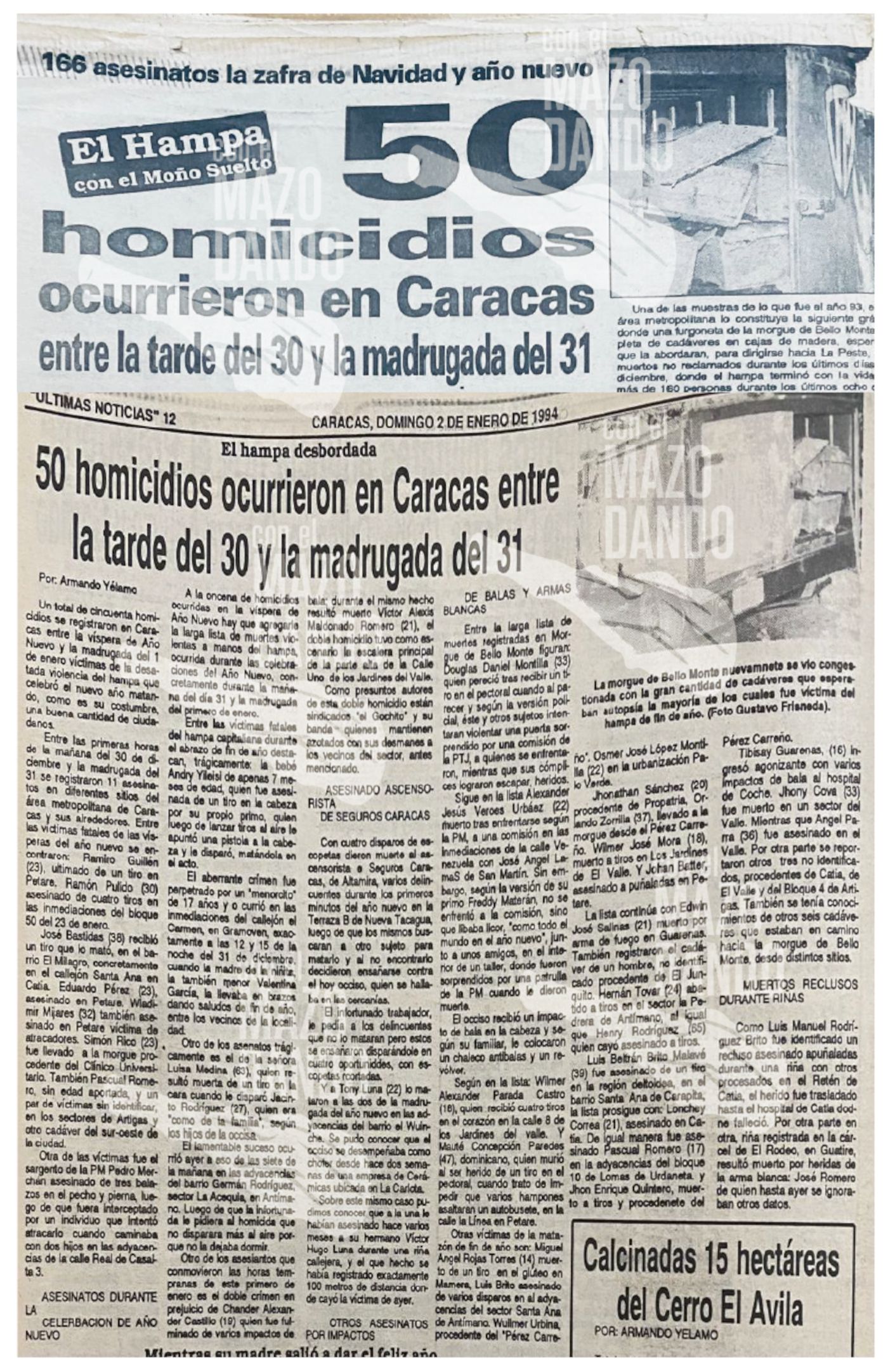
- 166 murders were reported between December 23 and 31, 1993 (Latest News).
- 15 homicides were recorded on Saturday, December 4, 1993 (Latest News).
- The police chronicles of the time recurrently recorded between 30 and more than 50 violent deaths every weekend in the Metropolitan Area of Caracas.
- The statistics far exceeded the crime rates of most Latin American capitals, even being compared in the media to war zones.
- The context of violence in 1993 and 1994 was marked by:
- Socioeconomic inequality and inequity in income distribution.
- The institutional weakness of the police and justice administration systems.
- The rampant corruption among officials of the Attorney General's Office, who are reluctant to investigate and prosecute crimes effectively.
- The increase of the young population in conditions of unemployment or underemployment and exclusion from formal education systems
- The vast majority of violent weekend deaths were associated with the theft of sports shoes, vehicle theft, street robbery, reckoning, clashes between gangs over the control of micro-drug trafficking areas and armed street robberies.
- During the 1990s, various agencies, United Nations reports and associated organizations, such as the Economic Commission for Latin America and the Caribbean (ECLAC ) and the Office on Drugs and Crime (UNODC) documented a marked increase in social violence and urban crime at the global level, with a critical impact on Venezuela.
- During the 90s, Caracas was one of the most insecure cities in South America, and this, combined with the political and economic crisis, already showed the country's decline and what was to come.
- In July 1993, a series of attacks began with the explosion of envelopes and car bombs sent to different institutions. One of the most shocking cases occurred at the headquarters of the Supreme Court of Justice and at the Ciudad Tamanaco Shopping Center (CCCT).
Mazo News Team