34 years since the first air battle in Venezuelan history! 27N: Love and Patriotic Fire in Civic-Military Rebellion

Internet photo
Published at: 27/11/2026 08:05 AM
On November 27, 1992, a group of young soldiers with their hearts burning with national fire spearheaded a second Bolivarian hurricane (after February 4 of that same year) against the neoliberal economic policies of the government of Carlos Andrés Pérez, in accordance with the orders of North American imperialism.
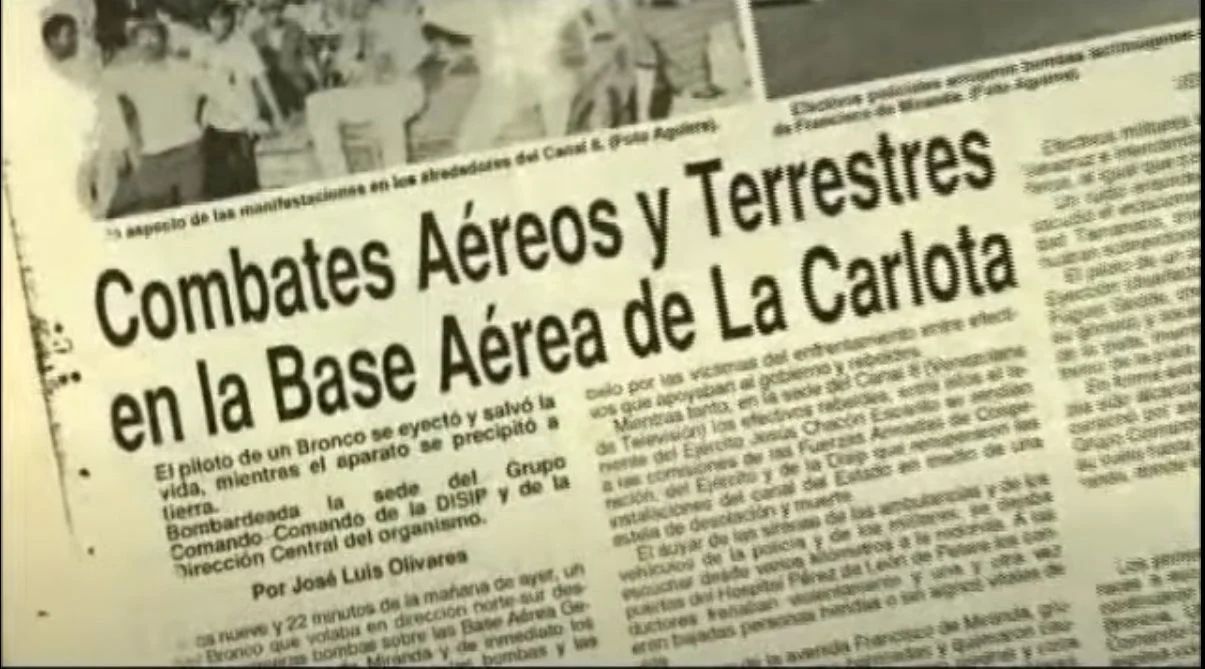
The Venezuelan people lived under an economic and social hanging that was reflected in the press at the time: “Elderly people request minimum wage and are repressed by the Metropolitan Police in Caracas”; “Kidney patients protest in front of Miraflores for the suspension of the dialysis service in Social Security”; “High school students asked for safety and were beaten by the PM”; among many other headlines that Última Noticias and El Diario of Caracas were recorded from November 22 to 26, 1992.
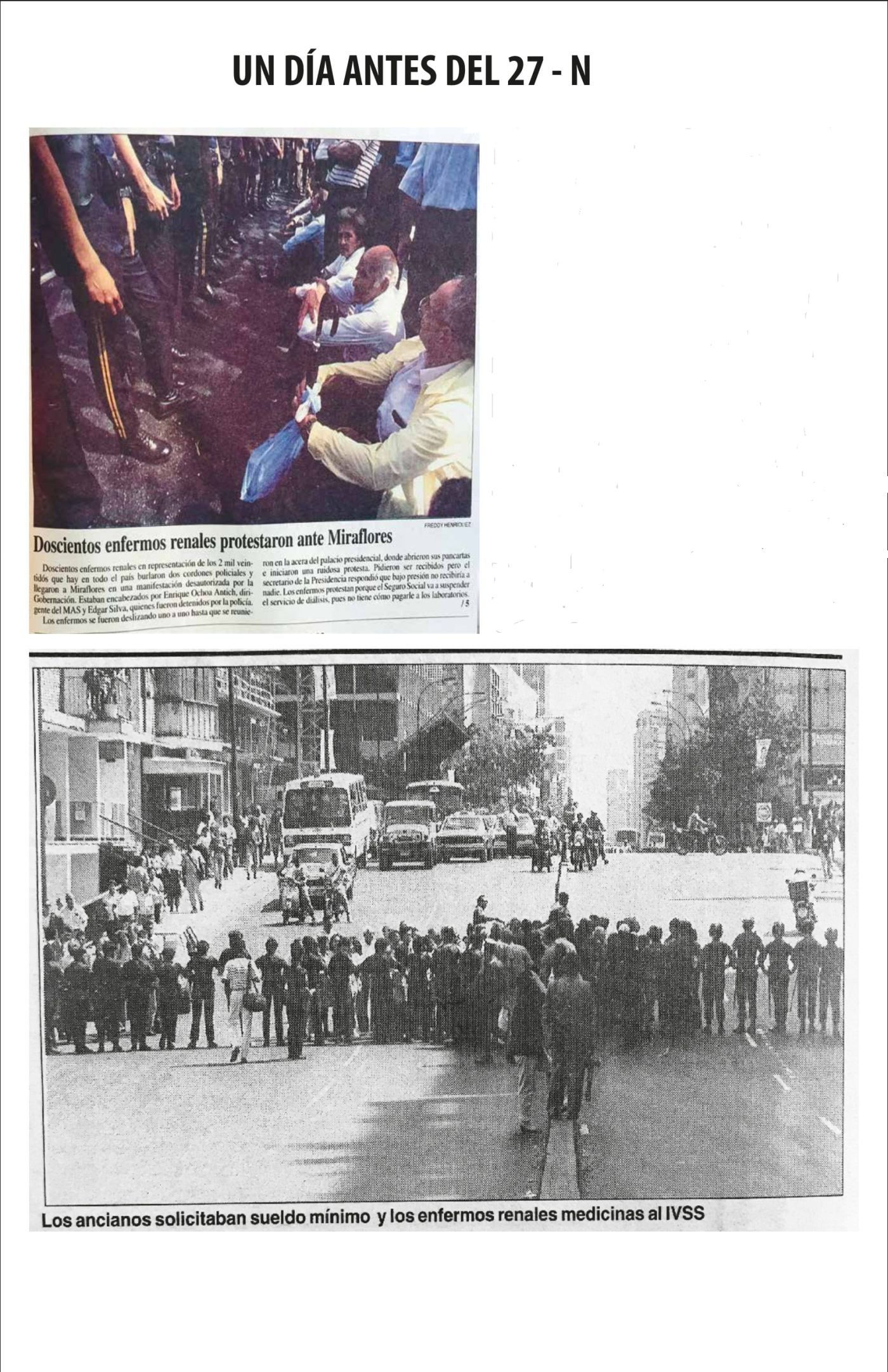
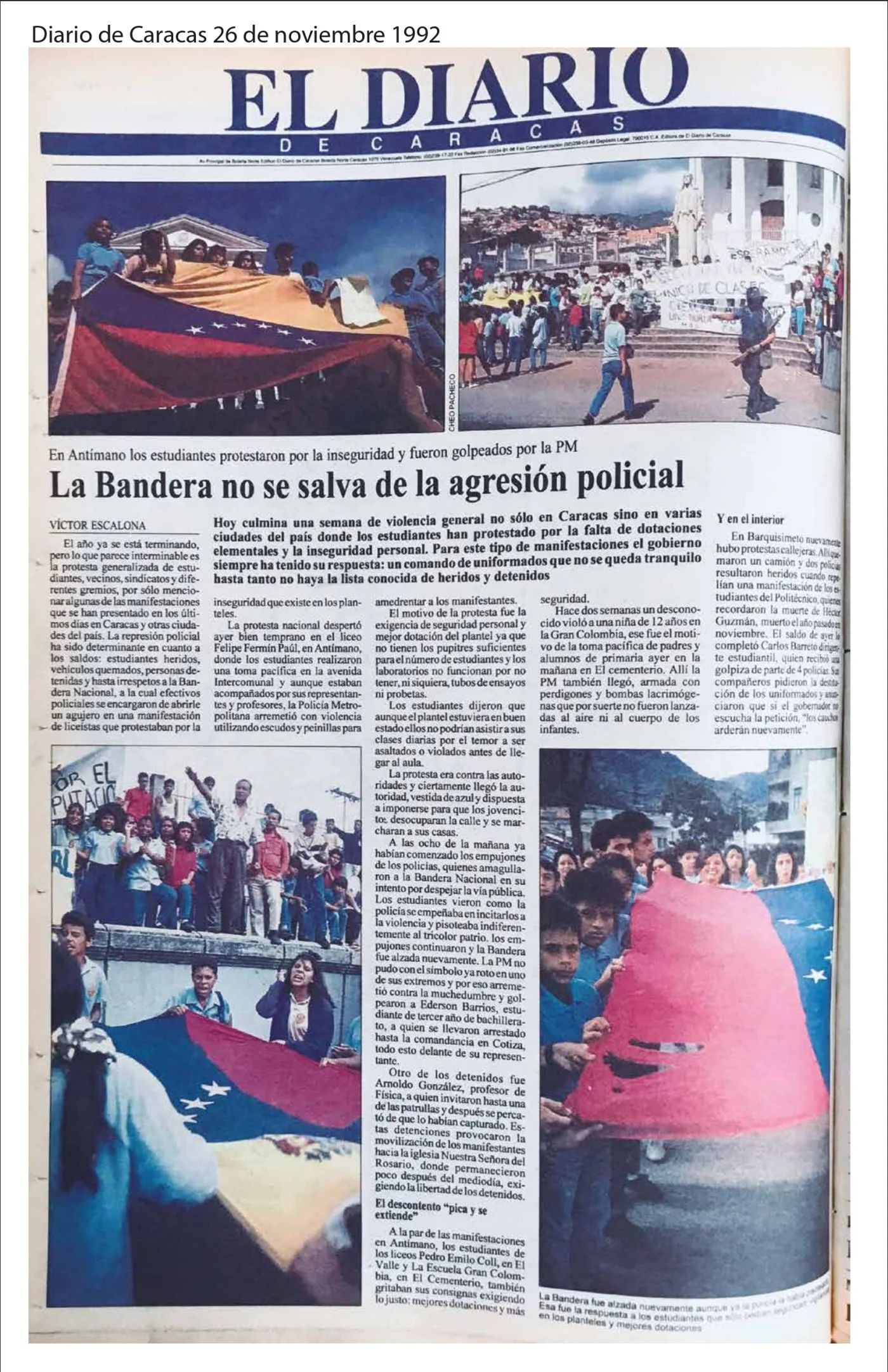
27N
“Comrades in arms, for now and forever the
Bolivarian Revolutionary Movement 200 returns to the fight with
Bolivarian flags raised in search of definitive victory,” said a
recorded message from Commander Hugo Chávez at 4:30am on
November 27 after Lieutenant Jesse Chacón took the signals from VTV, Venevisión and Radio Caracas.
The Military Rebellion, through the July
5 Movement, took to the skies of Caracas with the objective of leading the country
towards a destiny of peace.
It should be noted that before the air combat, a group
led by Captain Eliécer Otaiza began an assault on the Miraflores Palace.
“We're like three or four left alive. They had already
killed 14 people in the group. A lieutenant and two soldiers injured after
surrendering their weapons strafed them,” Otaiza explained in an interview with the newspaper Ciudad CCS
.
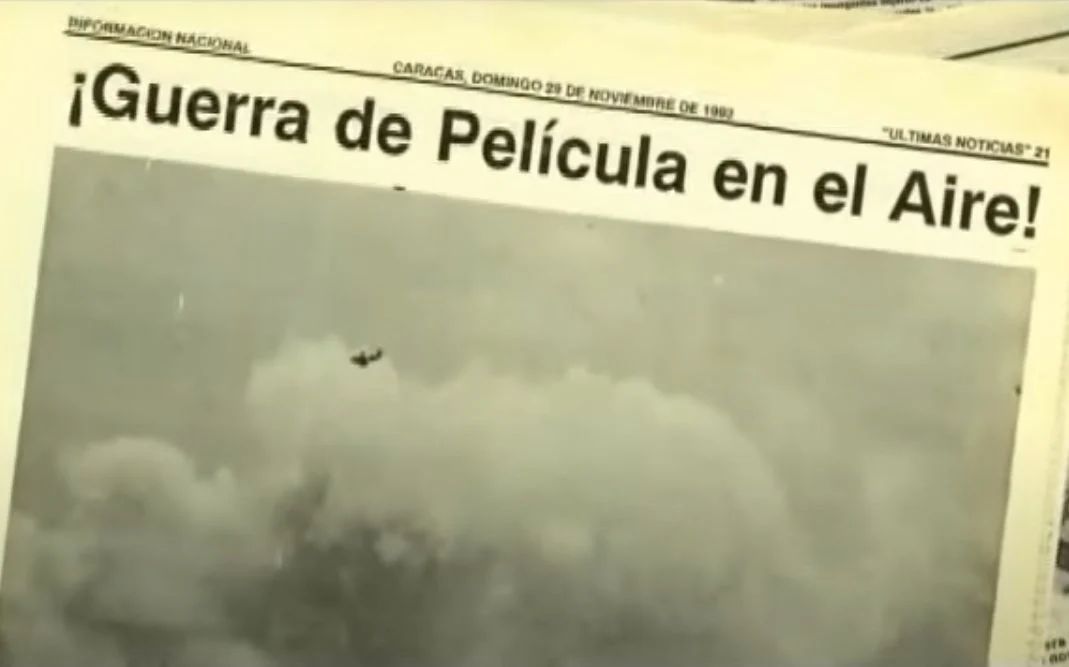
That day, four Bronco
planes, three Mirages fighters, two T2D and several
T27 Tucanos took off from Maracay. The main objectives
were: Miraflores Palace, El Helicoide and the Generalissimo Francisco de Miranda Air
Base (La Carlota) in Caracas.
The revolutionary aviators were able to control the La
Carlota, Sucre and Libertador bases in Maracay,
however, two F-16 planes that “
escaped us began to harass our planes, the
patriotic planes that were flying over Caracas,” Brigadier General Francisco Visconti Osorio recalled in an interview conducted in Venezolana
of Television (VTV), in 2012.
A rebel plane was shot down by two F-16s at
the Libertador Base. Faced with the attack, the patriots decided to take
Miraflores, El Helicoide and Fuerte Tiuna with Bronco
planes, but they were also shot down by Carlos Andrés Pérez's minions.
governor of the disappeared Federal District;
Vice Admiral Luis Enrique Cabrera Aguirre; also Luis
Reyes Reyes, member of the first cabinet of Commander Chávez,
former governor of the state of Lara and former deputy. Cabrera Aguirre was
the last man arrested in the San Carlos Barracks, after his
release the barracks were closed and converted into a historical museum.
The people also joined the battle, and there were
protests in different parishes in Caracas in support of the Bolivarian Movement.
“I think that for future generations it is a challenge to
understand historically the importance of this event in the
contemporary history of Venezuela, and maturing not only within the
air institution, but in the Venezuelan collective as a whole,” said Visconti. 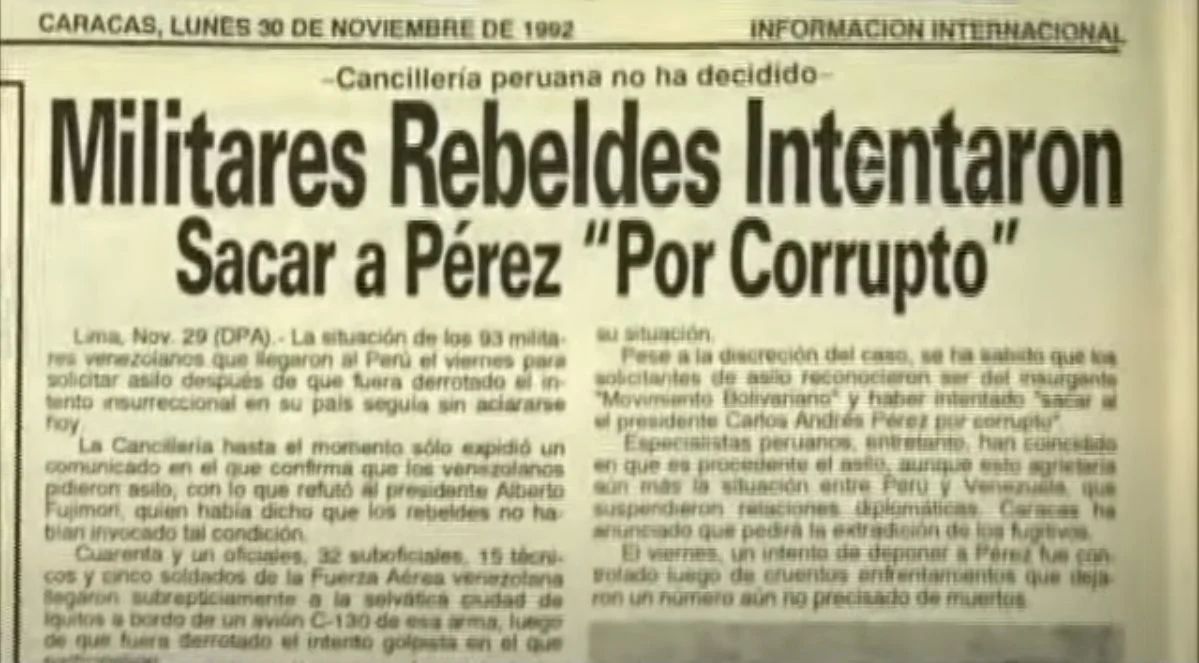
Another heroic attempt by 27N
Francisco Ameliach, together with Lieutenant Alejandro
Maya, ordered the most risky action: firing mortars at
this prison in order to rescue Commander Hugo Chávez and the rest of the revolutionaries involved in
the February 4 insurgency of that same year.
The spirits heated by the songs of Bolivarian
clarinets pushed the two men to take the plunge.
They were willing to leave Carlos Andrés Pérez, for that
they needed Chávez and the other leaders in the streets to accompany the uprising
. If this did not work out, at least the operation would serve as a
deterrent to some of the intentions of certain custodians to assassinate Chávez.
third, Ronald Rangel and university professor José Jiménez —who was carrying a video camera—arrived, aboard a rented Chevette , at the mayor of Yare. They were carrying only a few guns and a shotgun. They expected the weapons that Maya would bring from La Victoria. With the 60-millimeter mortar and the grenades secured, a few minutes before 7:00am, Ameliach asked Maya to accompany him to start shooting at the jail from a nearby hill. Upon the first detonation, Yare security responded with bursts from a 50-point machine gun. The bullets hit a Bahareque house, where the two men were on the floor. Around 70 meters separated the opponents. The defenders of the area numbered nearly 400. After the progressive collapse of the house as a result of enemy gunfire, and after having thrown the second explosive into the prison, Ameliach: who replied: “We have two more grenades left, let's give it to them!” The maneuver was dispersed when Yare's guards fired an AT-4 rocket, which hit the machine's blade, a matter that prevented a death toll. However, several people were injured, including some university students who had joined the rebels. In one of those breaths, a lady approached the Bolivarians to offer them coffee. “I am Chavista, boys, rescue that man!” , encouraged.
Anti-imperialist act
Although the objective was not achieved, these men
won the hearts of the people because of their anti-imperialist thinking in favor
of the rights of Venezuelans.
During his 241st Aló Presidente,
the Leader of the Bolivarian Revolution, Hugo Chávez Frías,
highlighted and recalled the events of November 27, 1992 as the path
to freedom and independence of Venezuela.
“I want to pay tribute from here to my comrades in arms
who on November 27, 1992, crossed the national skies, toured fields,
towns and cities, giving each other an embrace with the Venezuelan people. I want to
remember, from here, the martyrs of that day in a very
special, very special way, our Venezuelan Air Force, the Air Force
that took flight to freedom that day,” emphasized the Commander from
the state of Zulia on November 27, 2005.
He also emphasized that this event marked the beginning of a
project, of a dream of liberation and justice.
Because of the sacrifice of these national heroes, Military Aviation Day is celebrated in Venezuela every November 27, who, like the patriots of February 4, 1992, began a project of Bolivarian emancipation .
Mazo News Team